Vegetable Pad Thai Recipe
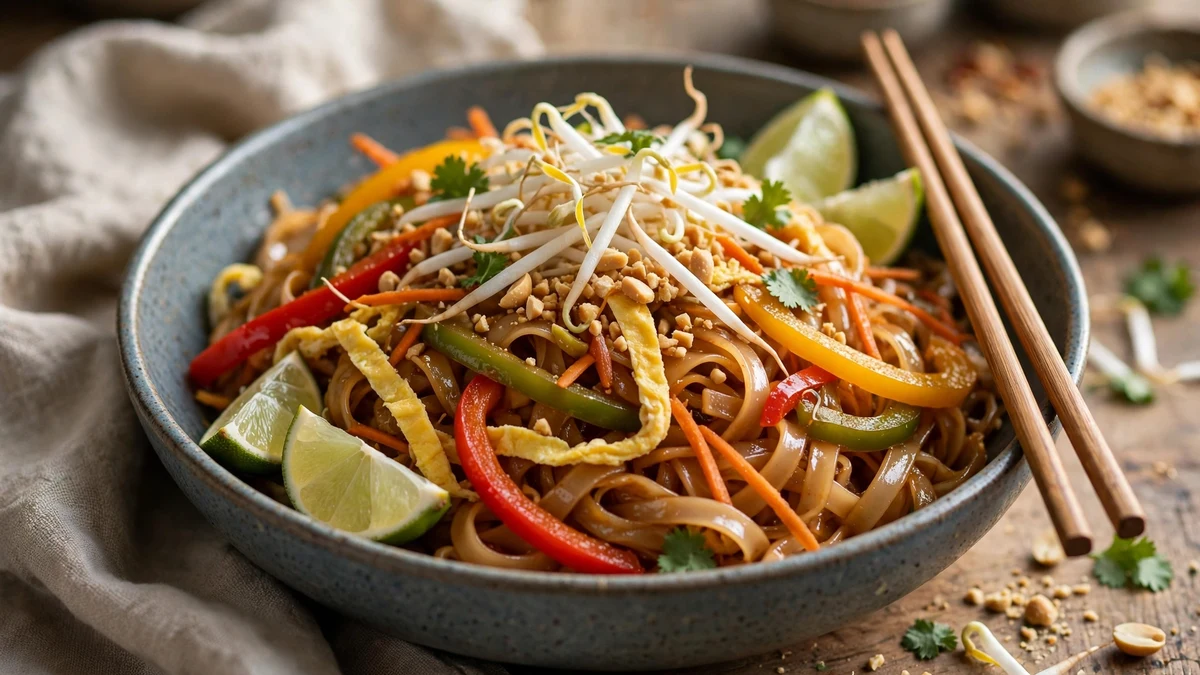
Pad Thai is the kind of dish that makes a weeknight feel like a small celebration. Rice noodles tangled with crisp vegetables, scrambled egg and crunchy peanuts, all coated in a sauce that balances sweet, sour and salty in every bite. It comes together in one pan in about half an hour, and it tastes every bit as good as the version from your favorite Thai restaurant.
This vegetable version keeps things light and colorful, with peppers, carrots and bean sprouts doing the heavy lifting. The sauce is the star — tamarind for tang, a little sugar for sweetness, and soy sauce for salty depth — and once you have it mixed, the cooking is fast. Have everything chopped and ready before the pan gets hot, because pad Thai waits for no one.
Short on time? Skip straight to the recipe card at the bottom of this post for exact quantities and steps.
Why You’ll Love This Vegetable Pad Thai
- Restaurant flavor at home — the classic sweet-sour-salty sauce, made in your own kitchen.
- Fast once prepped — the actual cooking takes about 10 minutes.
- Colorful and fresh — peppers, carrots, sprouts and herbs in every forkful.
- Easy to adapt — add tofu, egg, or whatever vegetables are in the fridge.
- One pan — noodles, vegetables and sauce all come together in a single wok.
Vegetable Pad Thai Ingredients
- Flat rice noodles — the wide, flat kind made for pad Thai; soaked, not boiled to mush.
- Tamarind paste — the sour heart of the sauce; do not skip it.
- Brown sugar — for the gentle sweetness that balances the tamarind.
- Soy sauce — salty depth in the sauce.
- Lime juice — fresh, for brightness at the end.
- Garlic — minced, cooked first so its flavor runs through the dish.
- Eggs — scrambled right in the wok and folded through the noodles.
- Firm tofu — cubed and browned, for protein and bite.
- Red bell pepper — sliced thin, for sweetness and color.
- Carrots — julienned, for crunch and a touch of sweetness.
- Bean sprouts — added at the end so they stay crisp.
- Spring onions — chopped, for a fresh oniony finish.
- Roasted peanuts — crushed, for topping and crunch.
- Vegetable oil — for the wok; a neutral oil that can take high heat.
- Chili flakes — optional, for those who like heat.
- Lime wedges — to serve, for squeezing over each plate.
How to Make Vegetable Pad Thai
- Soak the noodles. Place the rice noodles in a large bowl of warm water and soak for 8 to 10 minutes until pliable but still firm. Drain and set aside.
- Mix the sauce. Whisk together the tamarind paste, brown sugar, soy sauce and lime juice in a small bowl until the sugar dissolves.
- Fry the tofu. Heat oil in a large wok over high heat. Fry the tofu cubes for 2 to 3 minutes until golden on the edges, then push them to one side.
- Scramble the egg. Add a little more oil if needed, pour in the beaten eggs, and scramble them quickly in the wok, breaking them into ribbons.
- Cook the vegetables. Add the garlic, bell pepper and carrots and stir-fry for 2 minutes until just tender but still crisp.
- Add noodles and sauce. Tip in the drained noodles and pour over the sauce. Toss everything together for 2 to 3 minutes until the noodles are tender and coated.
- Finish and serve. Fold in the bean sprouts and spring onions, take the pan off the heat, and serve immediately topped with crushed peanuts and lime wedges.
What to Serve with Vegetable Pad Thai
- Extra lime wedges for squeezing over
- Crushed peanuts and chili flakes on the table, so everyone seasons their own plate
- A light cucumber salad on the side
- Fresh herbs — Thai basil or cilantro — scattered over the top
- Spring rolls, if you want to turn it into a feast
Variations and Substitutions
- Add chicken or shrimp — stir-fry them first and set aside, then fold back in with the noodles.
- No tamarind? — use lime juice plus a teaspoon of rice vinegar as a stand-in, though the flavor will be a little sharper.
- Extra vegetables — broccoli, mushrooms, zucchini or snap peas all work well.
- Spicier version — add sliced fresh chili with the garlic, or a spoonful of chili sauce.
- Gluten-free — use tamari instead of soy sauce; the noodles are naturally gluten-free.
Expert Tips
- Do not over-soak the noodles — they should still feel firm when you drain them, because they finish cooking in the wok.
- Prep everything before you start cooking. Pad Thai moves fast and there is no time to chop mid-stir-fry.
- Use the highest heat your stove allows — a screaming-hot wok gives the noodles that light, smoky sear.
- Toss, do not stir. Lifting and folding keeps the noodles intact instead of breaking them into bits.
- Taste the sauce before it goes in the wok — it should be boldly sweet, sour and salty, because the noodles will mellow it.
How to Store Vegetable Pad Thai
Fridge: Store leftovers in an airtight container for up to 2 days. The noodles will absorb the sauce and soften, so it is best eaten fresh.
Freezer: Not recommended — the noodles turn mushy on thawing. Make only what you will eat.
Reheating: Warm gently in a pan with a splash of water to loosen the noodles, and add fresh bean sprouts and peanuts after reheating for crunch.
Vegetable Pad Thai FAQs
Why are my pad Thai noodles mushy?
They were over-soaked or overcooked in the wok. Soak only until pliable but firm, and toss in the wok for just 2 to 3 minutes — the noodles should be tender with a slight chew, not soft.
Can I make pad Thai without tamarind?
You can, but tamarind is what gives pad Thai its signature sour flavor. A stand-in of lime juice and a little rice vinegar works in a pinch, though the taste will be sharper and less rounded.
What noodles should I use for pad Thai?
Flat rice noodles, about a quarter inch wide, are the classic choice. Soak them in warm water rather than boiling — boiling makes them gluey before they ever reach the wok.
Is vegetable pad Thai vegan?
This version is vegetarian as written. To make it vegan, leave out the egg and use a vegan fish-sauce alternative or extra soy sauce in place of any fish sauce.
Can I add protein to vegetable pad Thai?
Absolutely — tofu is already in here, and chicken, shrimp or a fried egg on top all work well. Cook the protein first, set it aside, and fold it back in with the noodles.
Vegetable Pad Thai Recipe
Ingredients
Method
- Soak the noodles. Place the rice noodles in a large bowl of warm water and soak for 8 to 10 minutes until pliable but still firm. Drain and set aside.
- Mix the sauce. Whisk together the tamarind paste, brown sugar, soy sauce and lime juice in a small bowl until the sugar dissolves.
- Fry the tofu. Heat oil in a large wok over high heat. Fry the tofu cubes for 2 to 3 minutes until golden on the edges, then push them to one side.
- Scramble the egg. Add a little more oil if needed, pour in the beaten eggs, and scramble them quickly in the wok, breaking them into ribbons.
- Cook the vegetables. Add the garlic, bell pepper and carrots and stir-fry for 2 minutes until just tender but still crisp.
- Add noodles and sauce. Tip in the drained noodles and pour over the sauce. Toss everything together for 2 to 3 minutes until the noodles are tender and coated.
- Finish and serve. Fold in the bean sprouts and spring onions, take the pan off the heat, and serve immediately topped with crushed peanuts and lime wedges.