Gazpacho (Cold Tomato Soup) Recipe
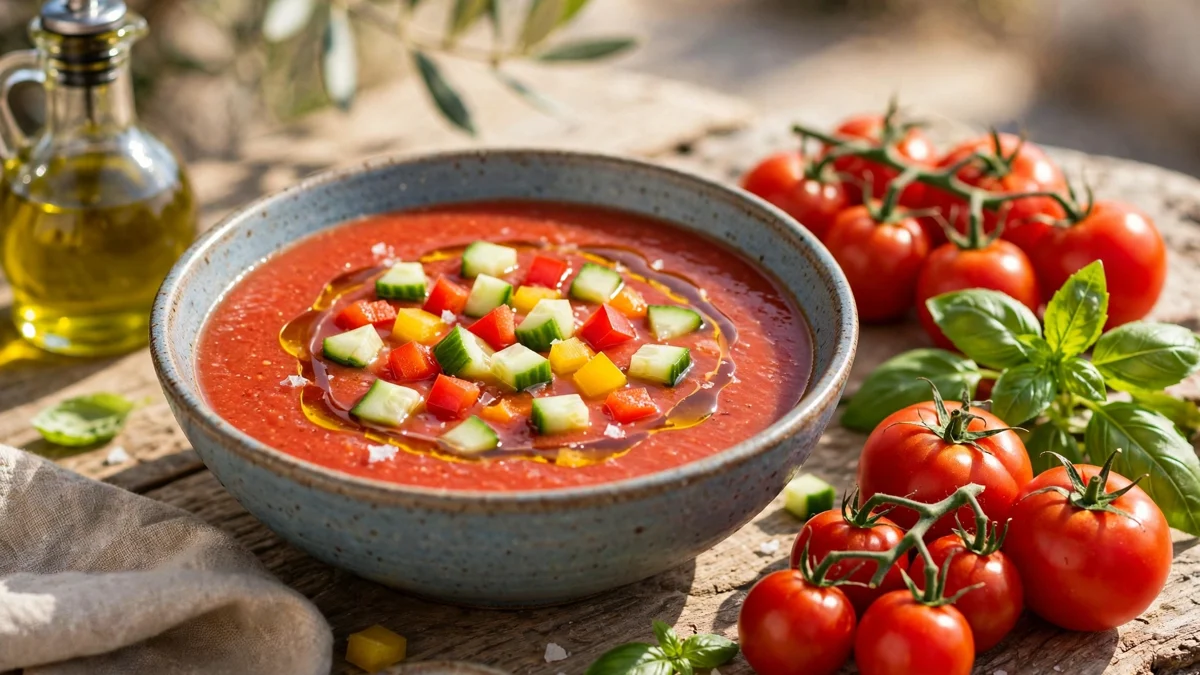
On the hottest afternoons of summer, the last thing anyone wants is a steaming bowl of soup — and that is exactly why gazpacho exists. This chilled Spanish tomato soup is blended raw, served cold, and tastes like the garden at its peak: ripe tomatoes, cool cucumber, sweet pepper and a whisper of garlic, all brightened with sherry vinegar and good olive oil.
It is the appetizer I make when tomatoes are piling up on the counter and dinner needs to start with something that wakes everyone up. Ten minutes of blending, a rest in the fridge, and you have a starter that feels elegant enough for guests and easy enough for a Tuesday.
Short on time? Skip straight to the recipe card at the bottom of this post for exact quantities and steps.
Why You’ll Love This Gazpacho
- No cooking at all — the blender does every bit of the work.
- Peak-summer flavour — ripe tomatoes and raw vegetables at their freshest.
- Make it ahead — it tastes even better the next day, after the flavours marry.
- Light and refreshing — about 120 calories a bowl, yet full of flavour.
- Pretty in the glass — serve in small glasses or bowls with a confetti of diced vegetables on top.
Gazpacho Ingredients
- Ripe tomatoes — the heart of the soup; they must be deep red and fragrant, or the gazpacho will taste flat.
- Cucumber — peeled, for coolness and body.
- Red bell pepper — sweetness that balances the tomato acidity.
- Red onion — just a little, for gentle bite.
- Garlic — half a clove is plenty in a raw soup.
- Stale white bread — the traditional thickener; it gives the soup its silky body.
- Olive oil — your best extra-virgin; it emulsifies the soup into something rich and glossy.
- Sherry vinegar — the bright, unmistakable flavour of Andalusia. Red wine vinegar works in a pinch.
- Salt — more than you expect; cold soups need confident seasoning.
How to Make Gazpacho
- Chop roughly. Cut the tomatoes, cucumber, pepper and onion into chunks — the blender does not care about neatness.
- Soak the bread. Tear the bread into a bowl, ladle over a little of the tomato juices, and leave for five minutes to soften.
- Blend everything. Add the vegetables, soaked bread, garlic, vinegar and salt to a blender and blend until completely smooth, about two minutes.
- Emulsify with oil. With the blender running on low, pour the olive oil in a slow stream. The soup will turn a shade paler and gorgeously creamy, even though there is no cream.
- Strain if you like. For a refined soup, pass it through a sieve. For a rustic one, serve as is.
- Chill well. Refrigerate for at least two hours — overnight is better. Gazpacho served merely cool instead of properly cold is a missed opportunity.
- Serve. Taste once more for salt and vinegar, pour into chilled bowls or glasses, and finish with diced cucumber, pepper, a thread of olive oil and a few tiny croutons.
What to Serve with Gazpacho
- Garlic-rubbed toast or crisp croutons for texture
- A platter of jamón, manchego and olives to keep the Spanish theme
- Grilled prawns or a simple seafood salad for a summer lunch
- Chilled hard-boiled egg, finely chopped, as a traditional garnish
- A crisp green salad and crusty bread for a light dinner
Variations and Substitutions
- Watermelon gazpacho — swap half the tomatoes for watermelon for a sweeter, rosy soup.
- Spicy gazpacho — add half a jalapeño or a dash of hot sauce to the blend.
- Gluten-free — skip the bread entirely; the soup will be thinner but still delicious, or blend in a chunk of cucumber extra.
- Green gazpacho — use cucumber, green pepper, green grapes and herbs for a completely different, garden-fresh soup.
- Smoky gazpacho — a pinch of smoked paprika blended in adds depth on cooler evenings.
Expert Tips
- Tomatoes are everything here — if they are pale and watery, wait for better ones or add a spoonful of tomato paste for depth.
- Season after chilling and taste again — cold dulls salt and acidity, so the final adjustment must happen cold.
- Blend the oil in last and slowly. Dumped in all at once, it will not emulsify and the soup can taste greasy.
- Chill the serving bowls too — it keeps every spoonful properly cold at the table.
- Dice the garnish small and uniform; it should sit on the surface, not sink.
How to Store Gazpacho
Fridge: Keeps for up to 3 days in a sealed container. In fact, day two is often the best day.
Freezer: Freeze for up to 2 months. Thaw in the fridge, then re-blend for a few seconds to restore the emulsion before serving.
Garnish: Always add fresh, just before serving — diced vegetables go soft if they sit in the soup.
Gazpacho Recipe FAQs
Is gazpacho served hot or cold?
Always cold — it is a raw, chilled soup. Chill it for at least two hours so the flavours settle and the temperature is properly refreshing.
Can I make gazpacho without bread?
Yes. The bread adds body, but without it the soup is lighter and still flavourful. Many modern versions leave it out entirely.
Why does my gazpacho taste bland?
It almost always needs more salt and another splash of vinegar. Season it when it is fully chilled, because cold food tastes less seasoned than it is.
Can I use canned tomatoes?
In winter, good canned whole tomatoes are a fair standby, though the soup will taste cooked rather than garden-fresh. Fresh ripe tomatoes are worth waiting for.
How long does gazpacho keep?
Up to 3 days in the fridge. The flavour deepens over the first day, then slowly fades, so plan to finish it by day three.
Gazpacho (Cold Tomato Soup)
Ingredients
Method
- Chop all vegetables roughly.
- Soak the bread in a little of the tomato juices for 5 minutes.
- Blend vegetables, soaked bread, garlic, vinegar and salt until completely smooth, about 2 minutes.
- With the blender on low, stream in the olive oil to emulsify.
- Strain through a sieve if a refined texture is wanted.
- Chill at least 2 hours; taste cold and adjust salt and vinegar.
- Serve in chilled bowls topped with diced vegetables, croutons and a thread of olive oil.
Notes